Bay Harbor Islands, Florida
 info@upideas.us
 (305) 572-5670

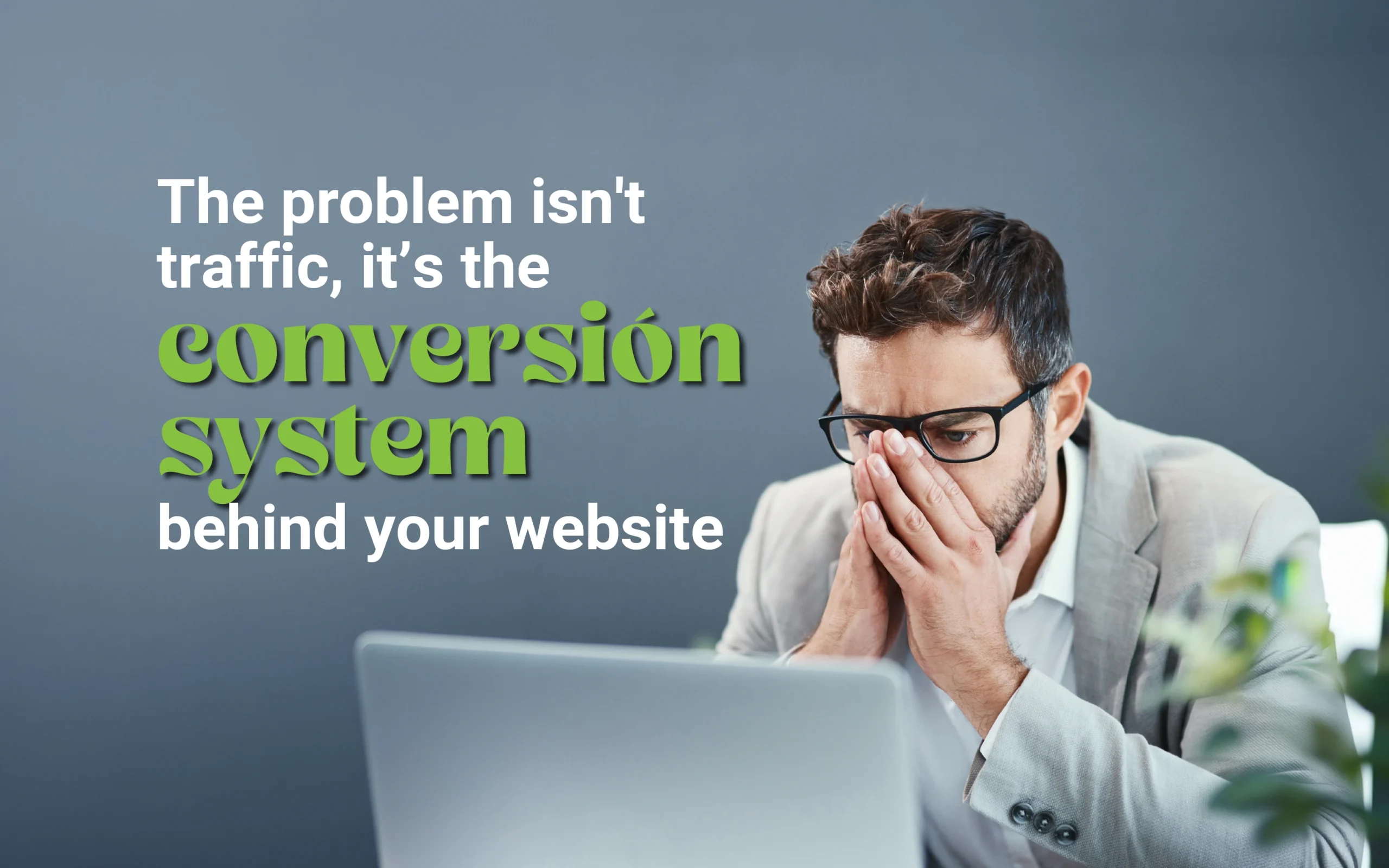
Web Conversion: The problem isn’t traffic, it’s the conversion system behind your website
Many companies today have website traffic.
They invest in ads, work on SEO, publish content, and maintain a constant presence on social media. People arrive, browse, click… and yet, nothing happens.
They don’t buy.
They don’t book meetings.
They don’t move forward.
And almost always, the conclusion is the same: “We need more traffic.”
But the reality is different.
The problem usually isn’t how many people arrive at your website, but the experience they have once they are inside.
When a website exists, but doesn’t convert
Most websites are designed to display information, not to help make decisions. They work like digital catalogs: they explain who you are, what you do, and what you sell, but they don’t guide the user through their actual decision-making process.
They don’t read behavior.
They don’t understand context.
They don’t adapt to the user’s timing.
Everyone sees the same thing, in the same order, with the same messages. And so, the visitor gets distracted, hesitates, and leaves. Not necessarily because they aren’t interested in what you offer, but because no one clearly indicated what the next step was.
Marketing is like a sandwich (and here is the problem)
Digital marketing works like a sandwich.
And there is nothing worse than a sandwich with a bad filling.
Many companies obsess over the bread. Especially the top bun: attracting traffic, launching ads, generating visits. Or the bottom bun: repeat purchases, loyalty, the thank-you email.
But they forget about the filling.
And let’s be honest: no one remembers a good sandwich for the bread.
What makes you want to order it again is the filling.
In marketing, the filling is everything that happens between the moment someone lands on your website and the instant they make a decision. That is where the conversion is won or lost. And that is exactly where most websites fail.
The perfect example: misused pop-ups
A very common case of this problem is pop-ups.
Most websites use them poorly. Very poorly.
Pop-ups that appear after 10 seconds regardless of what you are looking at.
Generic messages that have nothing to do with the product or section you are in.
Windows that are hard to close and generate frustration.
You are looking at a specific product and a generic message appears that adds no value. It doesn’t respond to your interest, it doesn’t resolve an objection, and often, it just interrupts.
The result?
More friction, higher bounce rates, and fewer conversions.
However, when pop-ups are designed based on user behavior, the story changes completely. When they are triggered based on pages visited, products viewed, or actual exit intent, and the message aligns with what the user is evaluating—whether it’s social proof, related products, or information that helps them decide—the impact is real.
In these types of scenarios, we’ve seen conversion rate increases of up to 40%, without aggressive discounts and without increasing traffic spend. The difference isn’t the format, but the timing and the message.
What happens when the filling is done right
When the conversion system is well-designed, the website stops pushing random messages and starts guiding decisions. It doesn’t interrupt, it directs. It doesn’t guess, it interprets behavior.
The user sees relevant content, recommendations aligned with their interests, trust signals at the right time, and calls to action that make sense for their stage in the journey. Conversion stops feeling forced and starts feeling natural.
Why we stopped being a traditional agency
This understanding was key for us. Running ads without designing what happens after the click is, ultimately, driving traffic to a system that isn’t ready to convert.
That’s why we stopped working as a traditional agency and developed the Up Acceleration Suite: an integrated system where the website, messages, touchpoints, and automation work together so your digital assets actually work for you.
Our role isn’t to execute isolated actions, but to orchestrate the entire conversion system, so you can focus on your business while the digital infrastructure does its job.
Conclusion
If your website gets traffic but doesn’t convert, the problem won’t be solved with more ads. It’s solved by reviewing the system, understanding the user’s actual journey, and designing experiences that respond to their behavior at the right time.